5×4 4-in-1 Golf Hitting Mat: Inserts & Tees Guide
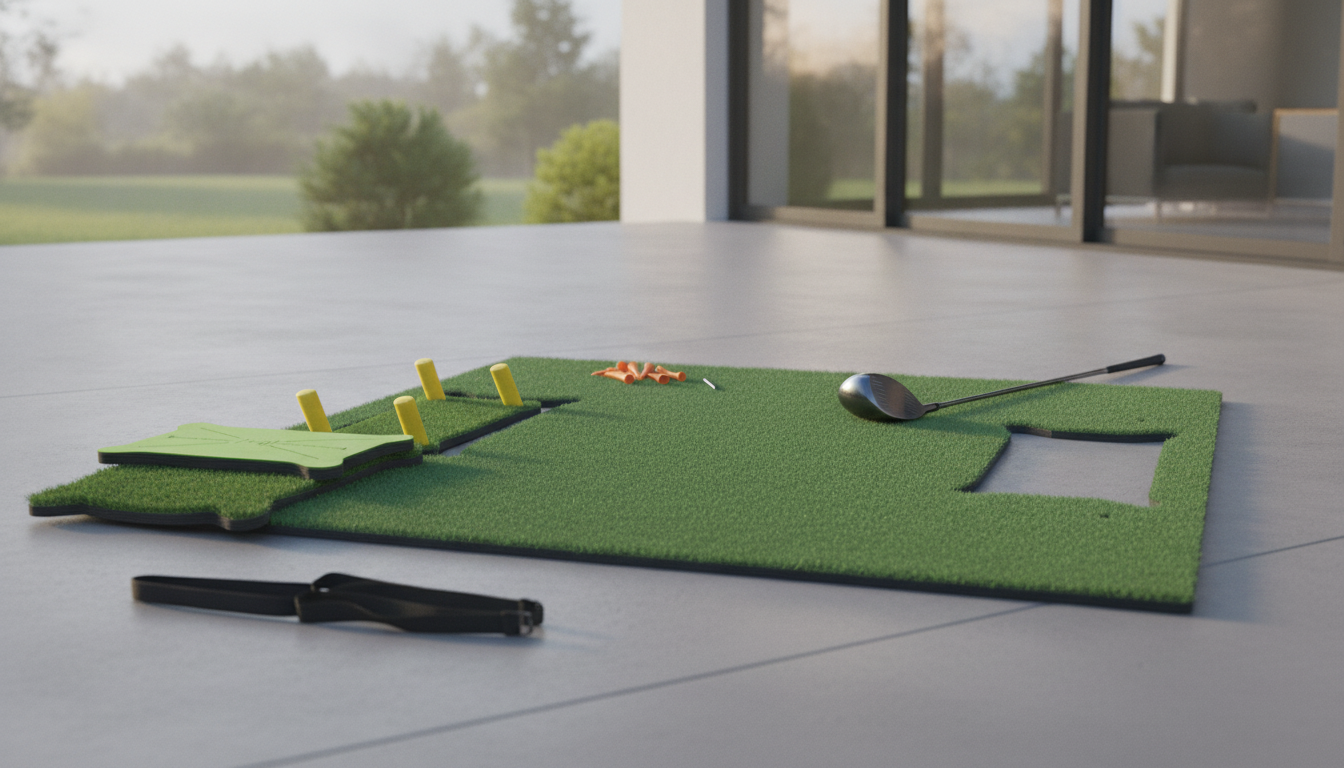
4-in-1 Golf Hitting Mat 5x4ft with Interchangeable Turf Inserts & Tees
A stable practice surface can make range sessions at home feel more consistent and protect both clubs and wrists. This 5x4ft 4-in-1 hitting mat pairs a roomy stance area with interchangeable turf inserts and tees to simulate common lies and help dial in contact.
What the 5x4ft hitting area changes about practice
A 5x4ft footprint gives most golfers enough width and depth to set up naturally. When a mat feels cramped, it’s easy to subconsciously shorten the backswing, crowd the ball, or drift your balance—small changes that show up as toe strikes and heel strikes.
With more standing room, you can hit a bucket’s worth of shots without constantly shuffling your feet, re-centering the ball, or trying to “find” the hitting spot again. That consistency matters for building repeatable low point and start line, especially when moving between wedges, mid-irons, and longer clubs in one session.
The extra space also makes it easier to keep an alignment stick or spare club on the mat as a reference without interfering with the strike zone. A simple visual lane can tighten dispersion faster than repeatedly guessing where “square” is.
Interchangeable turf inserts: practice the lies that show up on the course
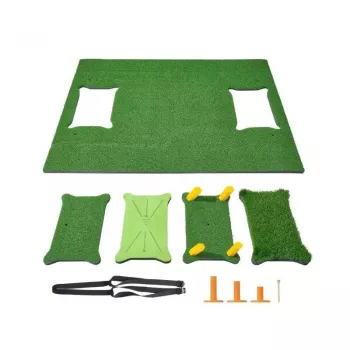
The biggest advantage of a 4-in-1 concept is being able to swap the hitting feel without changing your setup location. Different turf lengths and densities naturally encourage slightly different strike demands—whether you’re working on a cleaner pick, a slightly heavier strike, or tighter ball-first contact.
Mixing surfaces also improves feedback. A fat miss that barely shows on one mat can feel obvious on another. Over time, this helps train better low-point control and face stability through impact. And because inserts can be rotated, you can distribute wear more evenly than pounding the same patch every day.
Common practice goals by turf insert type
| Insert feel | Best for practicing | Contact focus |
|---|---|---|
| Tight/short turf feel | Crisp irons and wedges, low-flight knockdowns | Ball-first contact and stable low point |
| Medium turf feel | Everyday full swings, tempo work | Consistent divot pattern and face control |
| Longer/rough-like feel | Escapes, steeper entries, speed through impact | Maintaining speed and avoiding face flip |
Tees and tee compatibility: dialing in driver and fairway wood height
When you’re working on driver launch, spin, and face strike location, tee height is a hidden variable that can derail progress. A consistent tee height helps make your sessions more “apples to apples,” so you can actually tell whether a swing change improved the outcome or if the ball simply sat higher.
Interchangeable or replaceable tees keep practice moving as parts wear. It also helps if you like to run specific drills—higher tee for positive angle-of-attack feels, then a slightly lower tee to encourage center-face contact and a stable club path.
A mat that supports different tee heights is also useful beyond driver: you can rehearse 3-wood and hybrid tee shots that come up on tight par 4s or long par 5s without guessing your setup each time.
Stability, thickness, and joint comfort
One of the most frustrating parts of at-home practice is a mat that creeps across the floor. A stable base minimizes shifting on concrete, garage floors, patios, and many indoor surfaces—so your stance and target line stay consistent from swing to swing.
Cushioning is equally important. Very thin mats can feel harsh at impact, especially on slightly heavy strikes, which may increase stress on wrists and elbows over higher-volume sessions. A more forgiving strike zone can make frequent practice more sustainable, particularly with wedges and mid/short irons where reps add up quickly.
For long-term club care and comfort, it’s still smart to avoid hammering the exact same spot. Rotate inserts and vary the strike area so the mat can rebound naturally and stay true longer.
Best places to use it: garage, backyard, patio, and indoors
Garage setup
A garage is one of the easiest places to build a repeatable practice bay. Pair the mat with a quality net, confirm you have enough ceiling height for your full finish (especially driver), and keep the floor clear so you’re not adjusting your stance around storage items.
Backyard or patio setup
Indoor use
Setup tips for better feedback in every session
For additional fundamentals and practice ideas, the PGA of America instruction library is a reliable reference, and the USGA Rules of Golf hub is helpful for equipment-related guidance.
Care and maintenance to extend mat and insert life
Who it suits best
Product details and what’s included
At-a-glance summary
| Item | Detail |
|---|---|
| Product | 4-in-1 Golf Hitting Mat |
| Size | 5x4ft |
| Key feature | Interchangeable turf inserts |
| Extras | Tees included |
In-stock picks
- 4-in-1 Golf Hitting Mat 5x4ft with Interchangeable Turf Inserts & Tees
- 12-Ton Heavy Duty Hydraulic Shop Press for Garage and Workshop
FAQ
Can a hitting mat damage irons over time?
Very hard, thin mats can increase impact stress—especially on slightly heavy strikes—so adequate cushioning helps reduce harsh contact. Rotating strike areas and maintaining solid ball-first technique also helps minimize unusual wear over many sessions.
How much space is needed to practice safely with a net and mat?
Allow enough room for a full backswing and follow-through, plus safe clearance around the ball; ceiling height is often the limiting factor for driver. Place the net far enough away to reduce bounce-back and make sure the floor is flat and stable so your footing doesn’t change mid-swing.
Which turf insert should be used for wedge practice?
A tighter/shorter turf insert is usually best for wedge work because it promotes crisp, ball-first contact and reliable low point feedback. Mixing in a rough-like insert occasionally can help train speed through impact, and rotating inserts prevents premature wear in one spot.













Leave a comment