Steam Straightener Brush: Ceramic + Ionic, Less Frizz
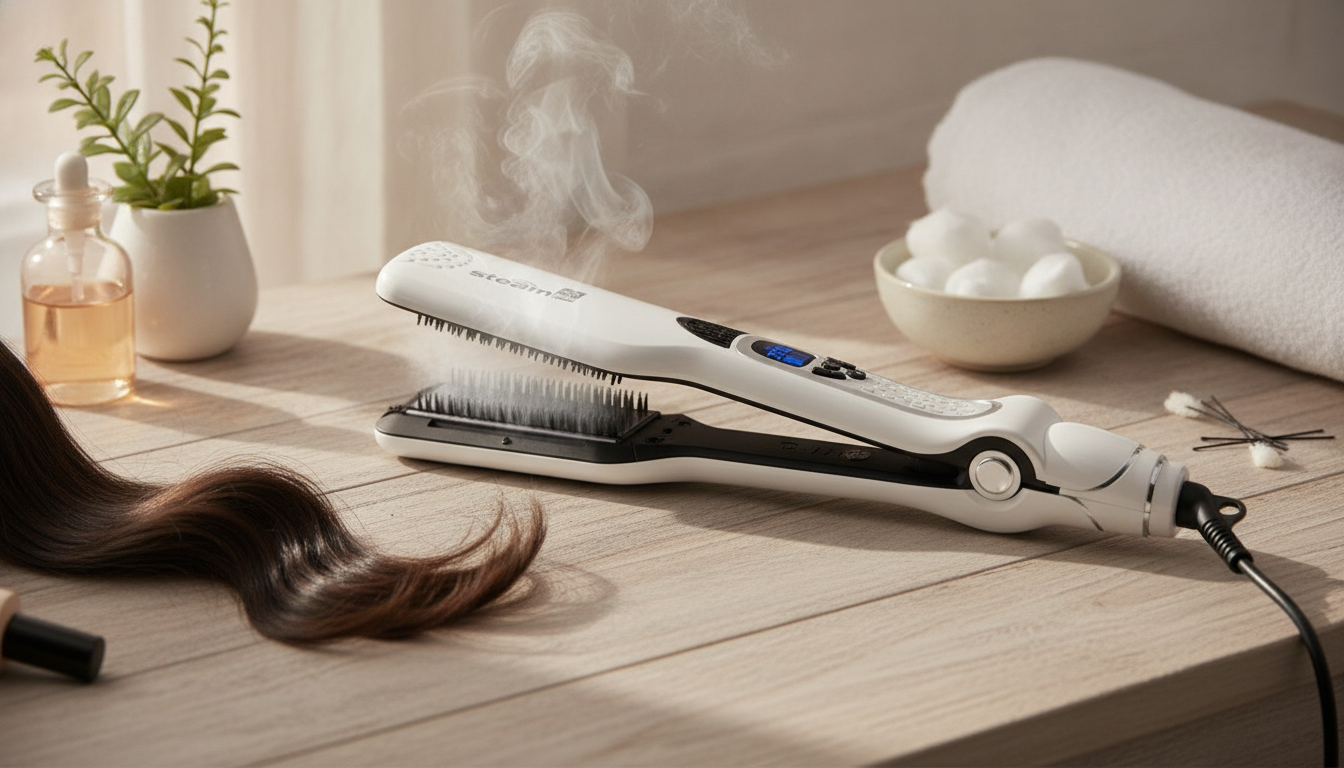
Steam Hair Straightener Brush with Ceramic Flat Iron & Ionic Heating Comb: Smoother Hair with Less Fuss
A steam straightening brush combines heat, moisture, and a detangling brush format to smooth hair faster with less snagging than a traditional flat iron. Instead of clamping plates down on a section, you glide through hair like a brush—while ceramic heat, ionic output, and controlled steam work together to refine texture, reduce static, and boost shine. Below is a clear breakdown of how a ceramic, ionic, steam-heated comb works, what results to expect by hair type, and how to use it safely for sleek, touchable finishes.
What a steam straightening brush does differently
- Brush + straighten in one pass: A brush-style tool helps keep strands aligned as you style, which can reduce repeated clamping and tugging.
- Steam adds controlled surface moisture: A light veil of steam can soften the outer layer of hair, making it easier to reshape while styling—without relying on soaking-wet hair.
- Ceramic heat supports even distribution: Ceramic heating surfaces are known for more consistent heat transfer, helping reduce hot spots that can over-dry sections.
- Ionic output helps smooth the finish: Negative ions can help reduce static so hair lays flatter with fewer flyaways.
If you want a single tool that can detangle, smooth, and polish hair for everyday wear, consider the Steam Hair Straightener Brush with Ceramic Flat Iron & Ionic Heating Comb, designed for a brush-through approach to straighter, shinier hair.
Ceramic + ionic heating: what it means for frizz and shine
Frizz often comes from a combination of dryness, static, and raised cuticles that catch humidity. Ceramic and ionic technologies target those causes in different ways:
- Ceramic consistency: More uniform heat can help you use fewer corrective passes, which is especially helpful for hair that dries out quickly.
- Ions for smoother lay: Ionic output is commonly used to reduce static and help strands sit closer together, which can make hair look glossier under light.
- Technique still matters: Best results typically come from using a heat protectant and working in small, controlled sections so heat exposure stays brief.
- Extra care for porous hair: If hair is bleached, highlighted, or highly porous, keep temperature lower and limit repeats to protect moisture balance.
For general hair-health guidance (including minimizing damage from heat styling), the American Academy of Dermatology Association recommends practical care habits that support healthier hair and scalp over time.
Who it suits best (and what to expect by hair type)
Steam brushing can be a strong fit for anyone who prefers a natural-looking, wearable straightness—sleek but not overly pressed. Results vary by texture and density:
- Fine hair: Lower heat and quick passes help prevent over-flattening. Light steam can add polish without making strands limp.
- Wavy hair: Often the “sweet spot.” Waves tend to smooth quickly while keeping movement through the lengths.
- Curly/coily hair: Works best after thorough detangling and in smaller sections. Many people see a stretched, smoothed finish rather than pin-straight hair in one pass.
- Thick/coarse hair: Sectioning is key. Use higher heat only as needed, keep hair fully dry, and move at a steady pace for even smoothing.
| Hair type | Typical result | Best approach |
|---|---|---|
| Fine | Smooth with added shine; can lose volume if overheated | Low heat, minimal steam, 1–2 passes per section |
| Wavy | Fast smoothing and frizz control | Medium heat, steady brushing, finish with cool-down |
| Curly/Coily | Stretched, sleeker finish; may need extra passes | Small sections, moderate steam, follow with serum |
| Thick/Coarse | Noticeable smoothing; takes longer without sectioning | Section carefully, adjust heat gradually, slow consistent passes |
How to use a steam straightening brush for the smoothest finish
- Start with clean, fully dry hair: Steam tools are not a substitute for drying wet hair. Styling damp hair can increase the time hair is exposed to heat.
- Apply heat protectant: Mist or cream formulas can help reduce moisture loss and improve slip while brushing.
- Detangle thoroughly: Work from ends upward so the brush glides without catching, especially around the crown and nape.
- Section your hair: Clip hair into layers. Smaller sections allow the heated bristles to contact strands evenly for a smoother result.
- Glide roots to ends at a controlled pace: Avoid stopping on one spot. A slow, steady pass typically outperforms multiple fast passes.
- Finish lightly: For extra sleekness, use a small amount of anti-frizz serum or a silicone-free smoothing cream—too much product can weigh hair down and cause buildup.
- Let it cool: Cooling helps set the shape before you re-brush, tuck behind ears, or tie hair up.
If you’re also selecting styling products, the U.S. Food & Drug Administration offers helpful basics on cosmetics and hair products, including general safety and labeling context.
Steam, safety, and maintenance
When a steam brush is a better pick than a flat iron
More in-stock picks
- Steam Hair Straightener Brush with Ceramic Flat Iron & Ionic Heating Comb ($69.67)
- 12-Ton Heavy Duty Hydraulic Shop Press for Garage and Workshop ($234.97)
FAQ
Can a steam straightening brush be used on damp hair?
It’s best to start with fully dry hair. The steam function is controlled surface moisture, while damp hair can increase heat exposure time and lead to uneven smoothing or extra stress on strands.
Is ionic heating safe for color-treated hair?
Yes, as long as you use sensible temperatures and a heat protectant. For bleached or high-porosity hair, stick to lower heat and limit repeated passes to help preserve softness and shine.
What water should be used in the steam function?
Distilled water is preferred to reduce mineral scaling and residue. Avoid fragranced additives, and clean the water chamber and vents regularly so steam output stays consistent.











Leave a comment