Manual Leather Die Cutter for Cutting & Embossing Control
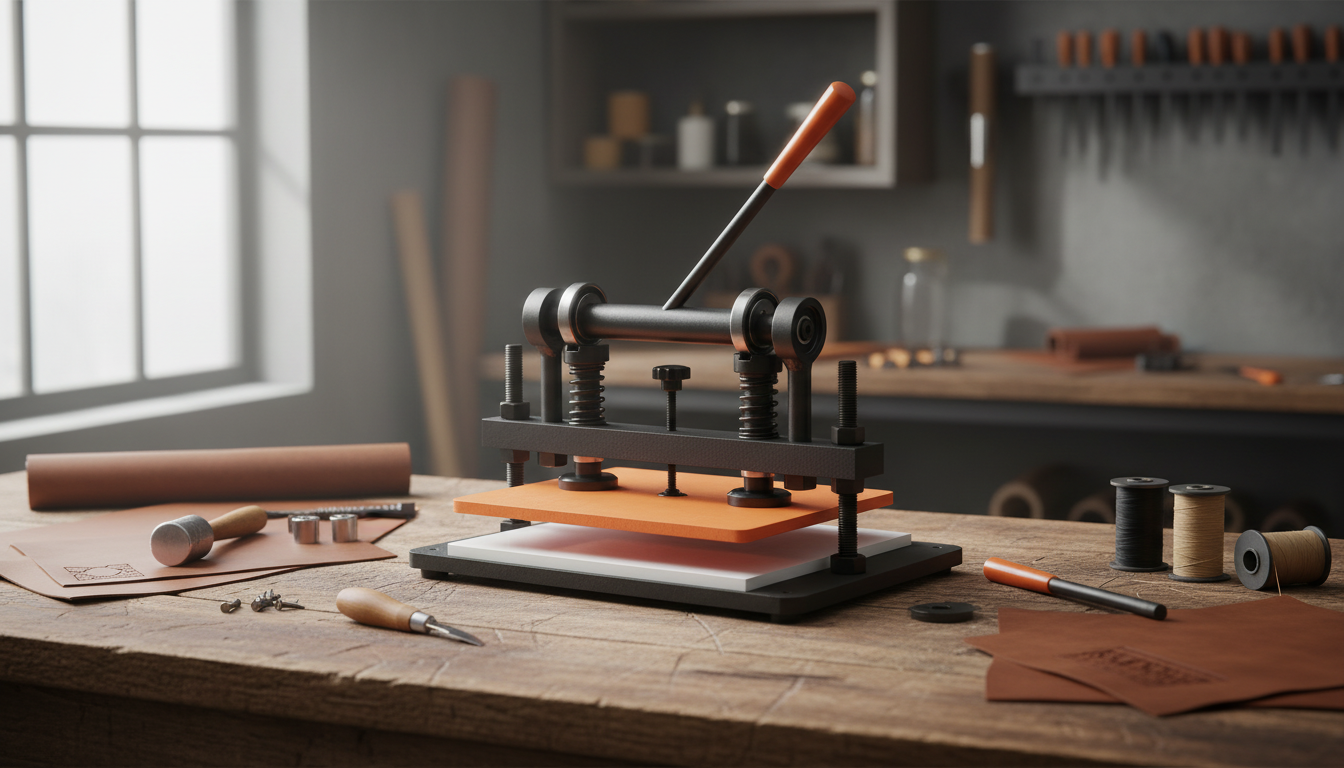
Leather Cutting & Embossing Machine – Manual Die Cutter with Adjustable Pressure Stroke
Clean cuts and consistent embossing depend on controlled pressure, stable alignment, and repeatable stroke depth. A manual die cutter with adjustable pressure stroke is built for leatherworkers and small studios that need reliable results across different hides, dies, and embossing plates—without the complexity of powered equipment.
What This Manual Die Cutter Does
A manual die cutter press converts hand-operated mechanical force into predictable, straight-down pressure—exactly what leatherwork needs when precision matters more than speed.
- Cuts leather shapes using steel-rule dies or cutting plates with hand-operated mechanical force.
- Embosses patterns and logos by pressing leather against embossing plates, folders, or stamp-style fixtures.
- Adjustable pressure and stroke settings help match different leather thicknesses and hardness levels (veg-tan vs. chrome-tan).
- Suitable for small-batch production where repeatability matters: straps, wallets, patches, tags, coasters, and panels.
Adjustable Pressure Stroke: Why It Matters
Leather varies from piece to piece, and tooling varies even more. A stroke stop (or adjustable stroke depth) gives a mechanical “end point” to the press travel, so each pull behaves like the one before it—without relying on guesswork.
- Prevents over-compression that can burnish edges unintentionally, distort embossing, or damage dies.
- Helps achieve full cut-through without repeated passes, especially on dense veg-tan or stacked layers.
- Improves consistency across a run by setting a repeatable stop point for stroke depth.
- Reduces waste by minimizing mis-cuts caused by uneven force or “guessing” the press travel.
Common setups and what to adjust
| Task | Typical leather | What to adjust first | Goal |
|---|---|---|---|
| Die cutting | 2–6 oz (0.8–2.4 mm) | Stroke stop depth | Cut through cleanly without crushing grain |
| Layer cutting | Two layers laminated | Pressure and backing board thickness | Cut both layers evenly; avoid shifting |
| Embossing / debossing | Veg-tan 3–8 oz | Pressure (incrementally) | Even impression with crisp edges |
| Foil / heat-assisted embossing (if used with separate tools) | Various | Pressure + dwell time (manual hold) | Uniform transfer without scorching |
Key Parts to Look For in Daily Use
Small shops benefit most from features that reduce fiddling. When the machine stays square and holds settings, each job takes fewer test pulls and produces fewer rejects.
- Rigid frame and stable base to limit flex during high-pressure cuts and deep embossing.
- Flat, aligned platens for even pressure distribution across the die or embossing plate.
- Smooth handle travel for controllable force—especially important for detailed embossing work.
- Clear adjustment points (stroke stop/pressure control) that can be locked to prevent drift mid-run.
- Space and access around the working area for positioning dies, jigs, and alignment marks.
How to Set It Up for Cleaner Cuts
Most cutting problems come from the sandwich: leather, die, and what’s underneath. A good setup protects tooling, keeps edges sharp, and avoids the “almost cut-through” frustration.
- Use a proper cutting pad/backing board to protect the platen and extend die life; replace or rotate pads as grooves develop.
- Start with a lighter setting and increase gradually—especially with new dies—to avoid chipping or bending rules.
- Mark alignment guides for repeat jobs (patches, tags) to speed up positioning and reduce skew.
- For thicker leather, increase support underneath rather than forcing excessive pressure; this can reduce edge “mushrooming.”
- Test on an offcut before committing to final pieces to confirm cut-through and edge quality.
Embossing Tips for Sharper Impressions
Embossing is less about brute force and more about even contact. When the platen is level and the stroke is controlled, fine lines stay crisp instead of turning muddy.
- Case veg-tan (lightly moisten) for deeper, cleaner embossing; avoid soaking, which can blur fine detail.
- Keep plates and leather clean—small debris can telegraph into the surface under pressure.
- Use registration marks or a simple jig for repeat placement of logos and patterns.
- Apply pressure steadily and hold briefly at full compression when deeper definition is needed.
- Allow embossed veg-tan to dry under minimal disturbance to preserve crisp lines.
Capacity, Workflow, and Who It Fits Best
For general background on leather as a material—why temper, tannage, and structure affect cutting and embossing—see Encyclopaedia Britannica’s leather overview.
Safety and Maintenance Basics
Even manual presses can pinch, crush, or eject damaged tooling. Basic guarding habits and routine checks help keep hands safe and results consistent. For broader guidance on guarding practices, review OSHA’s machine guarding requirements.
Product Options Available Now
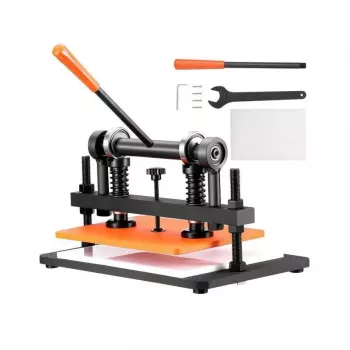
- Leather Cutting & Embossing Machine – Manual Die Cutter with Adjustable Pressure Stroke (In stock) — built for controlled, repeatable presswork across mixed leather weights, cutting dies, and embossing plates.
- 12-Ton Heavy Duty Hydraulic Shop Press for Garage and Workshop (In stock) — a separate option for heavier pressing tasks where higher tonnage is needed for non-leather shop projects.
FAQ
Can one machine handle both cutting and embossing on leather?
Yes—one manual press can do both when paired with the correct tooling and backers. Cutting typically uses a steel-rule die plus a cutting pad, while embossing uses an embossing plate or stamp-style fixture and a setup tuned for even contact rather than cut-through.
How is adjustable pressure stroke different from simply pulling harder?
Adjustable stroke sets a repeatable mechanical limit to how far the press travels, so pressure and depth are controlled by setup rather than guesswork. Pulling harder can vary from one cycle to the next and increases the risk of crushing grain, over-impressing detail, or damaging dies.
What should be used under the die to protect the machine and improve cut quality?
Use a dedicated cutting pad or backing board designed to take repeated die strikes, and rotate or replace it once deep grooves develop. Avoid hard surfaces that can dull die edges or mark the platen, since that often leads to ragged cuts and inconsistent results.















Leave a comment